1. Business Problem Introduction
As organizations grow, people operations become harder to manage. Payroll cycles expand. Compliance obligations increase. Manual processes introduce delays and errors. Finance teams chase corrections. HR teams struggle to keep records aligned. Leaders lose visibility into workforce costs and risks. These problems rarely appear all at once. They build gradually and surface during audits, funding rounds, or periods of rapid hiring. At that point, fixing them costs more time and effort than preventing them earlier.
2. What This Topic Means for Businesses
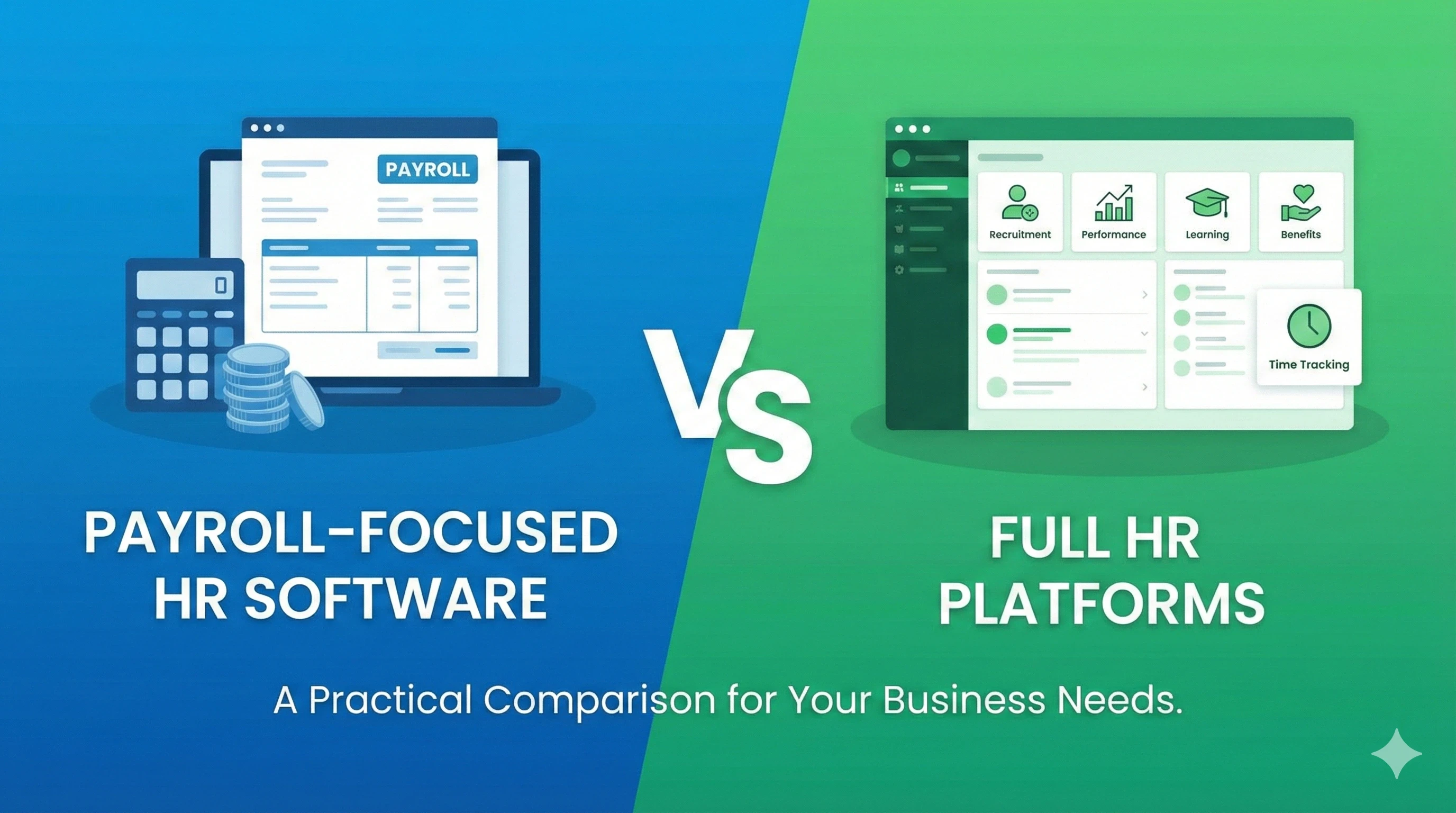
HR software systems support how organizations manage employees, compensation, and compliance. Payroll-focused HR software centers on salary calculation, tax deductions, and payments. Full HR platforms extend beyond payroll to cover employee lifecycle management, performance tracking, compliance monitoring, and analytics. Both models play a role in modern operations. Companies with simple structures and stable teams may only need payroll automation. Organizations with growing headcount, multiple locations, or regulatory exposure often require broader HR coverage.
3. Core Explanation of How These Systems Work
Employee data handling
Both payroll-focused systems and full HR platforms rely on accurate employee data. Payroll systems store core details such as salary, tax information, bank accounts, and employment status. Full HR platforms store additional records like contracts, job history, benefits selections, performance notes, and training data. Access controls restrict who can view or change information. Centralized data reduces duplication and reporting errors.
Payroll processing
Payroll-focused systems automate wage calculations, statutory deductions, and payment schedules. They support regular payroll cycles and handle adjustments for leave or overtime. Full HR platforms include payroll modules with similar capabilities but link them to broader HR data. This integration reduces mismatches between compensation, role changes, and payroll outcomes. Approval workflows and audit logs support financial controls.
Compliance tracking
Payroll systems focus on tax filing, statutory contributions, and payslip generation. They help meet payroll-related legal requirements. Full HR platforms track a wider range of obligations, including labor laws, leave entitlements, contract renewals, and document retention. Alerts and dashboards help teams monitor deadlines and reduce compliance gaps.
Reporting and audits
Payroll-focused software generates payroll summaries, tax reports, and payment records. These reports support finance reviews and statutory filings. Full HR platforms offer workforce analytics, headcount trends, turnover analysis, and compliance status reports. Audit logs capture changes across HR and payroll activities. This supports internal audits and external due diligence.
4. Comparison Table: Payroll-Focused HR Software vs Full HR Platforms
| Aspect | Payroll-Focused HR Software | Full HR Platforms |
|---|---|---|
| Primary features | Payroll automation, tax filing, payslips | Payroll plus employee lifecycle management |
| Operational impact | Reduces payroll processing time | Improves coordination across HR, finance, and compliance |
| Cost implications | Lower base cost, limited scope | Higher cost with modular pricing |
| Risk exposure | Covers payroll compliance only | Broader compliance and audit coverage |
5. Business Evaluation Checklist
✔ Central employee records
✔ Automated payroll calculations
✔ Tax and statutory compliance support
✔ Leave and attendance integration
✔ Reporting with audit logs
✔ Integration with accounting systems
✔ Role-based access controls
✔ Scalability for future growth
6. Pricing and Cost Structure Explanation
Payroll-focused HR software usually charges per employee per month. Some vendors add a base fee per payroll run. Features like multi-state payroll or contractor payments may cost extra. Full HR platforms follow modular pricing. Core HR and payroll sit in base tiers. Advanced features such as analytics, performance management, or compliance tools add incremental cost. Implementation and onboarding fees cover setup, data migration, and training. Prices vary based on workforce size, geographic coverage, and system complexity.
7. Risks, Limitations, or Trade-Offs
Payroll-focused systems limit visibility into broader HR operations. Teams often manage employee records and compliance outside the system. This increases manual coordination. Full HR platforms require longer setup and change management. Data migration takes effort. Ongoing administration demands trained users. Add-on modules can increase costs over time. Integration with existing finance or IT systems may require technical work.
8. Common Mistakes Businesses Make
-
Choosing payroll tools without planning future HR needs
-
Ignoring compliance obligations beyond payroll
-
Paying for full platforms before processes mature
-
Underestimating data cleanup during migration
-
Overlooking user training requirements
-
Treating software selection as a one-time decision
9. Graphs or Insight Visuals Explained
A cost versus employee count graph would show payroll-only software remaining economical at low headcount. As teams grow, additional HR overhead increases manual costs. Full HR platforms show higher initial cost but flatter growth over time.
An error rate comparison would show payroll errors rising with manual coordination across systems. Integrated platforms keep error rates steadier as complexity increases.
10. Practical Summary
Payroll-focused HR software suits organizations with simple structures and limited compliance exposure. Full HR platforms support broader workforce management and regulatory oversight. The right choice depends on headcount, growth plans, and operational complexity. Businesses benefit from aligning system scope with real needs rather than short-term convenience. Thoughtful evaluation supports accurate payroll, stronger compliance, and sustainable operations.